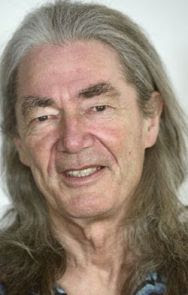
Showing posts with label Geoffrey Cornelius. Show all posts

Saturday, April 26, 2014

The Moment of Astrology


After 25 years of learning astrology, I have just read my first book on the subject from cover to cover. It’s The Moment of Astrology by Geoffrey Cornelius. What gripped me was that the author was questioning and re-assessing the whole tradition as it has come down to us. He uses a fair bit of scholarship, but in the service of his central thesis, which is that astrology is a form of divination: the ‘moment’ of astrology occurs when the daemon gets involved with your reading of the symbols, and an inspired and unique interpretation takes place.

An authentic reading involves both skill in the craft AND this other, hard-to-define element.

I think it’s the most important book out there on modern astrology.

In no sense is it scholarship ‘from the outside’ to prove a theory ‘about’ astrology, in the academic sense. No, this is astrology from the inside: he uses chart interpretations as evidence, and proposes that a non-rational means of knowing lies at the heart of our craft. Scholarship is used to clarify and affirm, rather than ignore, this non-rationality.

Ptolemy
While admiring the work of Ptolemy, the 2nd century definer of horoscopic astrology, Cornelius also to some extent deconstructs his work, and shows where later astrologers contradict him. In particular, he is concerned to de-literalise the moment of birth: the fact that an exact time is often impossible to ascertain suggests the necessity for a re-think. The birth of something is essentially a powerful IMAGE that astrologers use, powerful because that moment is held to contain the seed of all that comes after. But that is just one form of astrology.

Horary astrology, for example, which has often been treated as an outcast, is not like this. It is about asking a question and finding the answer in the chart for the moment the astrologer understood the question. And Cornelius gives some striking examples of horary working.

So the chart as the seed of something is not essential to what astrology is. Nor is even getting the right time for either a birth chart or a horary chart. As we all know, wrong charts often work!

The effect of this deconstruction is to remove the illusion of objectivity that is often there when we are dealing with a chart: when we learn astrology, it involves real planets with real meanings and rules of interpretation. And this gives the impression that astrology is ‘out there’ in the stars for us to read and interpret. Cornelius’ thesis, as I understand it, is that this is not the case. What we have is a set of symbols, on which the astrologer brings his divinatory consciousness to bear. And because astrology is not ‘out there’, each reading of a particular chart is unique, as many of us have experienced.

This is The Moment of Astrology, this unique, divinatory situation. And I think the title is a play on The Moment of Birth, which is what is usually understood as the moment of astrology: that exact moment that defines everything that is to follow, according to the Ptolemaic model, and which therefore suggests something ‘objective’ in astrology.


--------------------
Ad Break: I offer skype astrology readings (£60 full reading, £40 for an update). Contact: BWGoddard1 (at)aol.co.uk
---------------------


The opening chapters of the book thoroughly chronicle the history of the attempts to prove or disprove astrology scientifically. And while there are some results that are worth a second look, by and large the proof that emerges is that astrology is NOT scientifically verifiable. One of Cornelius’ strengths is that he looks at facts in the face, and this is one of them. And he turns it around to lend weight to his thesis that astrology is divinatory rather than ‘objective’.

Another fact he faces is that Science has good grounds for not taking astrology and other divinatory arts seriously, in that the standard is often so lamentable. I think that if astrology were recognised as essentially divinatory, rather than vaguely 'objective', it could take steps to develop more of an understanding of, and training in, this elusive, yet all-important, faculty.

Cornelius brings in the post-modern position of current thought, which relativises and denies the possibility of solid, irrefutable foundations to knowledge. And consistent with this, maintains that his is not the only way of looking at astrology.

My view on that is yes, providing that our understanding of astrology is mythological rather than literal. So you may take the view that there really are energies ‘out there’ associated with the planets – why not? – but if that becomes literalised into ‘that lump of rock is causing events on earth’, then I think the nature of astrology has been misunderstood.

This is not a comprehensive review of the book, just a few central points. Another area that gets raised, for example, is time: we usually assume that astrology involves a coming together in time of heavenly and earthly events. But this is not so. It is another case of ‘wrong charts working’. Even, in one case, a horary chart from several hundred years ago casting light on a similar situation now. And the modern divide between subject and object is also explored.

The cumulative effect of Cornelius’ deconstruction of some of the foundations of astrology is liberating: it frees us to fully acknowledge the divinatory element that, I suspect, is what drew us to astrology in the first place. And it connects us back to the origins of the craft in omens and augury and dreams. BUT, he says, that was never about foretelling the future, it was about how to live well, how to live in accord with the gods.

And paradoxically, another effect for me of this deconstruction was to make the foundations of astrology more solid. And the reason is that it brings astrology back to divination, or inner knowing, which in my view is the only solid foundation there is in life.

Saturday, April 12, 2014

The End of the World?


In the run-up to major astrological alignments, the word gets out and people start to get worried. And then…. Nothing happens. Or not much more than usual happens. And the fact that very little happens gets forgotten about, and people get worried all over again the next time there are some major alignments.

We’re in the middle of one of those periods right now. There is a Cardinal Grand Cross in the sky that will peak on 23rd April [1], and there are lunar and solar eclipses in the middle and at the end of the month respectively.

Astrology is not a mechanical thing. This is my beef with the way mundane astrology – the astrology of countries and politics and world events – is often practised, as though it can be reduced to a set of rules.

Astrology is essentially divinatory. In spirit it brings us back to ancient times when the seer would be posed a question or a problem, and he or she would head off and go into a trance or go to sleep and dream and would consult with the gods or whatever powers there were, and then would come back with advice. And the advice from that sort of realm is always about how to live well, maybe you are given some insight into a situation, or get told how to go about something, or given a cure for a medical problem.

That kind of consciousness, which is opaque to much of modern thought, is the context in which astrology arose.

With that perspective, it becomes absurd to separate the astrologer from the chart being read, and reduce it to a set of rules that can predict the future. We do not need to be told the future. What we do need as humans is to be reminded of the wider forces, natural forces that surround us, which we tend to forget but which need to be taken into account and which can also guide us.
That way we will live well. We forget those powers because the business of everyday living can be so demanding, or because we get inflated or depressed. So part of our job as astrologers is to remind people of that, not in a pedagogic way, but through the experience of those powers at work.

--------------------
Ad Break: I offer skype astrology readings (£60 full reading, £40 for an update). Contact: BWGoddard1 (at)aol.co.uk
---------------------

So when some major planetary alignments come up, they do not necessarily mean anything at all. You need an astrologer functioning beyond the rules to see their meaning, and his or her job is not really to portend catastrophic events, which is what people get most worried about. (It’s not just worry though, is it, we also want interesting, dramatic events to happen.)

I looked up an interpretation of the 2 coming eclipses by Bernadette Brady, and she writes: “… wasted energy or misdirected motivation… There can be sudden inspiration but this is potentially unfulfilling. No real action should be taken.” [2]

That was kind of synchronistic for my theme. Some of her interpretations have a lot of action around them. But this one could be summarised as not a lot is going to happen!

I had someone ask me if they should be worried about the Cardinal Grand Cross, and my answer was well it doesn’t interact with your personal chart, so you can probably ignore it!

To some extent, of course, astrology can be reduced to rules. We need them, they are the launch pad. And to some extent astrology-as-rules works. But what tends to happen when you use those rules repeatedly to generate a particular meaning is that it gradually stops working!

There is a trickster at work: Mercury, the messenger between the gods and this world, gets in the way. I suspect it is the same with homeopathy, for example: you cannot separate it from the practitioner, the who and the how is just as important as the pill itself, the diagnosis is not in that sense ’objective’. 2 homeopaths could prescribe the same pill in the same situation, but one pill may work better than the other because of where the homeopath ‘went’ to find the cure.

And for astrology to work well, there needs to be a real question, or a real issue. We know that through doing readings. You can be coming out with good standard interpretations of a chart, but somehow it’s not really going anywhere, you’re not connecting with the other person, and you’re interpretations aren’t that good as a result. And then bam! you find why the person is there for the reading, you connect with them on that level, and the chart opens up. I had an experience recently where I hit the issue, and it was exactly what the other person didn’t want to talk about, and wouldn’t give me information on it, but I kept coming back to it because that was where the chart was pointing.

So this brings me back again to the major alignments that people get concerned about, which I suppose belong to mundane astrology, because it is world events, floods and earthquakes and military invasions that vaguely seem to worry people.

Are people really worried, or just enjoying the thrill of potentially ‘interesting times’? Is there a real question? And where the worry is real, is that because of a particular way of looking at astrology and the heavens, as though the will of the gods is a mechanical thing that exists independently of the participation of the astrologer/seer/priest/witch doctor?

OK, many of us are prone to superstition at times, which is a kind of determinism. And astrology as it has come down to us is maybe the worst offender in this respect among the divinatory arts. And the offence comes from the idea that the heavens have a meaning that can be divined, that exists independently of the divinatory consciousness of the astrologer. And this is not the case. Why else would every astrologer have a different take on a chart? But nor is it just a ‘subjective’, whimsical act on the part of the astrologer. Every reading is particular and individual and dependent on the astrologer being able to go to that place in him or herself that the divination emerges from, and being able to bring the other person along.

It is an experience that you and the person you are reading for and the planets are all ‘inside’, it is a particular message from the gods, and if you try to stand ‘outside’ that – as we moderns tend to – then that essential sense of participation is lost. [3]

[1] As Mars moves from applying to separating in its opposition to Uranus

[2] Predictive Astrology p332

[3] Some of the ideas in this piece have been augmented through reading Geoffrey Cornelius’ ‘The Moment of Astrology’. I didn’t know about him until recently, and my response has been wow, at last, an astrologer who thinks like I do!