Showing posts with label Fundamentalism. Show all posts

Friday, April 29, 2016

This World, The Otherworld and the Self


Modern Shamanism is an attempt to re-create the spirituality of
indigenous peoples. It is hard to say how successful it is in that. What I think we can say is that if we listen to nature, listen to ‘the spirits’, listen, perhaps above all, to ourselves, we won’t go far wrong. It is this listening, this paying attention that is timeless. It is in itself a transformative, magical act.


It is also what has been lost. Nature reminds us of who we are. Yet there is little space for nature in urban life. And the voice of the collective is also very powerful, telling us how to live our lives, what makes us a ‘good’ person, what makes us a ‘bad’ person, what is sense and what is nonsense – and listening to ‘spirits’ generally comes under the nonsense, if not sectionable, category.


Shamanism could be seen as the act of listening to ourselves at all levels, and with that comes something that is uniquely ourselves, and with that comes the power to live.


The connection to the spirits that is made in shamanic journeying and other practices is also the connection to the imagination and the intuition – a level that is both deeply ourselves yet beyond us, connected to the whole web of life and matter.


Shamanism gives an initiation into the Imagination – capital ‘I’, a connection to the Otherworld, without which we are not fully human.


So the creation of an individual self lies at the heart of Shamanism, a self that does not exist without a deep connection to something beyond itself. It is hard to know how much room there is/was for this individuality in indigenous societies. No doubt it depended. But the pressure just to survive can demand conformity. In the West, we have been part of a large collective for a long time, a collective that for 1000 years has veered towards fundamentalism, whether of a Christian or scientific materialist bent.


Fundamentalism occurs once you think there is only one reality. I once asked a Chippewa-Cree friend if his people got fundamentalist about their own creation myth, and he said that was difficult, because they had several creation myths, some of them contradictory! For this reason I think it is good that children are taught both evolution and creationism: both these ‘isms’ can think they are the only reality and, like the Chippewa creation myths, it shows children that there is more than one way of looking at things. (Personally, I prefer creationism, because it at least has a transcendent reality.)


Shamanism itself can of course veer towards fundamentalism, just like anything can. At the heart of that veer is our very human need for certainty – ‘this is how it is’ – and we look for it in creeds and teachers or in a rigid sense of our own rightness, or the rightness of our spirit guides. Here's a test: how do you respond if someone disagrees with your 'spirit guide'?


This is where the ‘this world’ aspect of shamanism needs to come in. It is not enough to have a deep connection to the Otherworld. We need an understanding of our own psychology and the ability to dis-identify from it. In the American Indian stories you get Wisahitsa, a character who is always getting into trouble because of his own self-importance. So the Indians (as they call themselves, not ‘Native Americans’) spoke to and were helped by the spirits, but they were also, it seems, trained in human psychology.


So Shamanism needs to involve the cultivation of both the ‘this world’ and the ‘otherworld’ aspects of the personality. You could say that shamanism needs psychology, while psychology needs shamanism.


Part of the beauty of shamanism is its emphasis on direct experience. There is very little in the way of a particular worldview that can be turned into an ideology. The key is not to take things literally. Don’t, for example, take the idea of the upper world, middle world and lower world literally, as a cosmology that if embraced strongly will somehow bring one closer to the world of indigenous peoples.


Literalized reality presses very strongly upon us these days in the form of ‘facts’. Science doesn’t have creation stories like every other tradition before it, it has ‘facts’, how things ‘actually’ happened. My Chippewa Cree friend saw evolution as a story, not a ‘fact’, and that is how I try to treat all of science: a set of stories, useful stories in many cases, but still stories.


What we have lost is the reality of the inner world. Shamanism is an initiation into the ‘inner’ world. When that world is awake, the outer world becomes more relative: it is a manifestation of mind, of consciousness, it does not need to be taken so seriously any more.

Friday, November 13, 2015

ISLAMIC STATE, FUNDAMENTALISM AND THE WEST

NB I published this piece a few hours before the Paris attacks took place. I'd had an idea come to me about the way we project our own fundamentalism onto Islamic State, and I realised I had a blog to write. But the timing is interesting, as though the idea had drifted in to my mind from the collective.

Medieval Christianity got us in the way of thinking that there is only one reality, and we have continued to think in that way since modern science superseded Christianity. Thinking that there is only one reality is a definition of fundamentalism.
 

It all comes back, according to one theory, as to whether a religion arose in the jungle or the desert. In the jungle there are many realities, and you get polytheism. In the desert it is much more like one reality - the sand, the blue sky and the scorching sun - so you get monotheism. Which of course isn't always fundamentalist, but it lends itself to it more easily.

Christianity and Islam both arose in desert countries.

It can be hard to see our own fundamentalism in the West. I guess it's hard for anyone to see their own fundamentalism, as it's a shadow quality, one that we don't want to admit to. You just think that what you are seeing is the truth, the way things are. "Of course God didn't create the universe, there is no evidence for it; whereas there is plenty of evidence for the Big Bang." It depends HOW you think that: some are quite happy to think that and let others have their own views, whereas others - the 'New Atheists' -  want to root out religion wherever they find it. 


Others may not go that far, but when you hear the mocking tone as soon as you mention e.g. tarot or homeopathy (which in my view are essentially divinatory rather than scientific), then you know you haven't just got disagreement - which is fair enough - but a degree of fundamentalism. And that mocking tone is very common, it can be almost de rigeur amongst some academics.

The real fundamentalists, of course, are over there in the Middle East, particularly in the form of 'Islamic State'. Or, as even the BBC calls them, 'so-called Islamic State'. Or, as David Cameron calls them, 'ISIL' - a name they stopped using a while back. Either way, the official line seems to be to refer to them in such a way as to suggest we cannot possibly take these people seriously.


Which is understandable, even desirable, but it is also a case of collective projection. It is hard for us to see the extent to which we view our own form of knowledge - science - as the only form of knowledge, and our political system - democracy - as better, as superior, as more evolved, the only acceptable system. No, we are tolerant and fair, we seek real knowledge and a better world. 

Witch Hangings
It is people like Islamic State - and Islamists generally - who are the real ignorant fundamentalists. Of course, particularly in the USA, there are plenty of Christian fundamendalists (Europe having exported many of its religious extremists to the New World several centuries ago), as well as scientific fundamendalists, but at least they can unite in pointing the finger of intolerance at IS.

--------------------
Ad Break: I offer skype astrology readings (£60 full reading, £40 for an update). Contact: BWGoddard1(at)aol.co.uk
---------------------
And we are right in thinking all these things about IS. They really are all these awful things that we say they are. 

But we also enjoy judging them, disapproving of them, it makes us feel superior - well, some of us, at any rate - and that, I think, can be the sign that we deny those same qualities in ourselves. And it's an unconscious process. People are sincere in their hypocrisy. When we disapprove, we are saying to ourselves that we have none of those qualities in ourselves. But we do. We all have tendencies to fundamentalism, intolerance and violence.

Ironically, IS is an almost direct creation of the West, it is a shadow thrown up by our own imperialism - it is therefore part of us rather then just something 'Other'. It went something like this. Iraq was ruled by its Sunni minority. The West ousted the Sunnis and put the majority Shias in power, the 'democratic' solution. The Shias then discriminated against the Sunnis (because they are not an 'advanced' democracy like America and the UK), and the Sunnis fought back in the form of IS. This was predictable in advance, which is why I say IS is an almost direct creation of the West. IS, it seems, was created by ex-officers from Saddam's army, who knew all about fighting, and they put Al-Baghdadi as the figurehead, to give it religious legitimacy. At least, that is one story of how it came about.


IS has a very powerful idea behind it - the re-creation of a Caliphate stretching across the Middle East and beyond - so its origins will quickly be engulfed by mythology. (Rather like 9/11 was).

IS - or even the Taliban - versus the West is the latest version of the the old struggle between Islam and Christianity. Historically, they seem to be as bad as each other. Islam had been encroaching on the Byzantine Empire - which was Christian - for centuries before the Crusades began. When the West invaded Iraq, like it or not, it was carrying this mythology of the ancient enemy. You can either be conscious of it or unconscious of it, and if you deny that history - as a politician has to, at least in public - then it becomes unconscious.

Nowadays we do not call our Islamic enemies 'infidels'. We call them 'terrorists', which amounts to the same thing. In reality, we are engaged in a power struggle with Islam in the Middle East, just as we were 1000 years ago, and just as we did then, we de-humanise the enemy. Just as they de-humanise us.

The 1st Crusade occurred in 1096, and its immediate aim was to allow pilgrims access to the Holy Land, which had been denied to them since it came under Muslim control; its ultimate aim was to re-unite the 2 branches, East and West, of Christendom.

1096 was the aftermath of a Uranus-Pluto conjunction in Aries. Uranus-Pluto hard aspects, which occur every 40 years or so, herald periods of radicalism and power struggle. The conjunction is the most formative of the aspects, and Aries, as the 1st sign of the zodiac, begins things, by going to war if necessary. The Crusades began something - the power struggle between western Christianity and Islam - that continues even now.

The actual crossings of 2 outer planets churn up what is underlying, but we often don't see the results until a few years afterwards. Like the 11th century Uranus-Pluto conjunction. And like the Uranus-Pluto square of the late 20s-early 30s: Nazism came in its wake. And the conjunction of the mid-60s: the summer of love and many of the protests followed afterwards.

And it's the same now. Uranus and Pluto finished squaring in early 2015, soon after IS made its first big gains, but the real battle is only just beginning. 


And the main point I want to make is that Islamic State - 'so-called' or otherwise - is not just evil and 'other': it embodies tendencies that we all have, and more than that, it arose almost directly out of us westerners acting on those same tendencies, creating a situation of mass slaughter in Iraq: has IS killed as many people as the 250,000 or so killed by the sectarian fighting in the aftermath of the Iraq invasion?

Monday, December 09, 2013

How Astrology Works Part 1: Making Room for Astrology


There’s a joke about Wikipedia, which says that the problem is that it only works in practice. The same may be said about astrology. Every astrologer probably has their own theory, if they have one at all, about how it works. What we do know is that astrology is not a science, not in the modern meaning of the word. If you try and pin it down in that sort of way, it’ll probably stop working, offended at what you are trying to do with it.

Astrologers can provide stories rather than mechanisms about how their craft works. Much like things were 1000 years ago, when if you were asked how the world came into existence, you’d have said well God made it of course. And that was enough for people, and why shouldn’t it be? Why shouldn’t a story that is imaginatively appealing be enough? Even today, with our modern explanation of how it all came about – the Big Bang – at the heart of it you have something coming out of nothing. That isn’t a mechanism, that is a story, it has magic in it. Something out of nothing, who would have thought it?

Eurynome
A couple of the ancient Greek Creation Myths have a similar starting point. In their cases it was Chaos. In one story we read: “In the beginning Eurynome, the Goddess of all things, rose naked from Chaos.  She found nothing substantial to rest her feet upon, so she divided the sea from the sky, dancing lonely upon its waves. She danced to the south, and the wind set in motion behind her seemed something new and apart with which to begin a work of creation.”

Now I find that more imaginatively appealing than the Big Bang story, because from the beginning the universe is alive. It is not just a bunch of hot particles that have to wait billions of years for that incidental phenomenon, life, to appear. No, life is there from the word go in the form of the goddess of all things, Eurynome. And that, in my view, makes it closer to the reality of things than the Big Bang story.


--------------------
Ad Break: I offer skype astrology readings (£60 full reading, £40 for an update). Contact: BWGoddard1 (at)aol.co.uk
---------------------

As an astrologer, you experience all the time the intermingling of inner and outer, above and below, life and matter. On the final day of Uranus’ transit through Pisces, on 11 March 2011, there was a tsunami in Japan. The next day, with Uranus on its first day in Aries, a nuclear power plant exploded in Japan as a result of the tsunami.

I don’t think I need to unwrap the symbolism. It was one of those times when astrology describes events in the world with a raw, literal power. Awful as the events were for the Japanese people, for the astrologer they were a striking demonstration of the connections between heaven and earth. And people: at the moment of the explosion, Uranus was ½ a degree off an exact square to the Japanese Ascendant.

The ancient Greek Creation story continues, until we read: “Next, the goddess created the seven planetary powers, setting a Titan and Titaness over each…”

So there we have it. How does astrology work? It works due to the powers invested in the planets in ancient times by Eurynome, the goddess of all things. The planets have the names of Roman gods, but they were taken from the Greek – where for example, Hermes becomes Mercury. And, of course, modern western astrology has its roots in ancient Greek astrology.

As I said, every astrologer probably has their own theory/story about how astrology works. The above is just one story.

Traditional societies often have a number of Creation stories. The opening chapters of Robert Graves’ The Greek Myths are devoted to several of them.

I once asked a Chippewa Cree friend who is a story-teller if his people ever got fundamentalist about their Creation Myth, thinking of it as the way the world began, and he said no, that is because we have a number of stories, and they often conflict with one another!

So that is a very different mind-set to the one that, in the West, we have been used to for over one thousand years. A mind-set that says there is only one way that things are, and only one way that things began. That is a definition of fundamentalism, that there is only one reality.

Firstly we had it with Christianity, and now we have it with Science. That is not to say that all scientists are closed-minded and fundamentalist. Or indeed that all Christians are. Far from it. But built into the scientific method is the idea that things are only one way. If you have 2 theories – stories – then they are seen as competing, and sooner or later one of them must prevail. You can’t, for example, subscribe to both the steady state and the big bang stories of the origins of the universe. They are conflicting, and you can’t have that. I think well why not, they are both telling us different things about the cosmos, so let's have both.

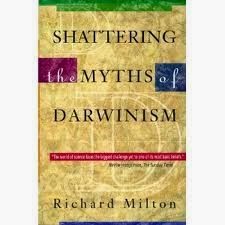
I think there is something to be said for the American schools where they are required to teach both Creationism and Evolution. Let’s not get too hot under the collar about one of these being ‘nonsense’. If you’re reading this, you may well think that Creationism is nonsense. If you read Richard Milton’s Shattering the Myths of Darwinism, you will see how full of holes the theory of, and evidence for Evolution is. But that is not the point. In these schools, children are being taught two contradictory Creation myths, and in my opinion that can be very good for producing open-minded adults, who are able to consider alternative ways of seeing the world. Out of 2 closed systems has arisen something that, potentially at least, could be a good thing, and probably not what either of them intended.

So in this consideration of how astrology works, I want to get away from the mindset that says there is only one explanation for everything. We are deeply conditioned to think like that – previous generations, after all, have been trained that way for over one thousand years.

Once you think there is only one explanation, then the stories stop being stories and become literal events, set in stone, with little for the imagination to play on.

To insist on one explanation implies that the human mind is capable of grasping the whole truth. The universe is so large and complex, our brains are so small in comparison, how could this be possible? And even that which we do see and know is an interpretation provided by our brains at a very fundamental, deep-structure level. Up and down, me and you, time, left and right – all these structures we have for interpreting reality are contingent, they are created by the brain. They are useful, they work, but it means we need to put inverted commas around absolutely everything!

Three decades ago I read Oliver Sacks’ The Man Who Mistook His Wife for a Hat. Sacks is a neurologist who had patients with brain disorders/injuries that affected their perception. You’d get patients, for example, who could tell you generally what something was – a playing card for example – but not that it was the Jack of Hearts. And you’d get patients with the reverse problem. Or ones who had lost the sense of left. So they’d do everything with the right hand side of their body. They would even eat the right hand half of what was on the plate, unaware of the left half, and then pull the plate round to the right and eat the right half of what was there. And so on.

Reading this book was a philosophically powerful experience, much more powerful for me than studying philosophical idealism, which posits that reality is mentally constructed. This book gave me an experience, as opposed to a mere mental awareness, of that philosophical position.

Of course, if we do see reality as just one way and as literal, then it provides a measure of certainty in an uncertain universe. And that is probably a perennial human tendency. It makes the big questions a whole lot easier, but also a whole lot less interesting. After you die you go to heaven or hell. After you die you are extinguished. These are both the same answer, in that they are providing certainty to a question that has no certain answers.

If you can live with metaphysical uncertainty, then the universe opens up. There is the sense of awe at just how mysterious place the cosmos is. As the biologist JBS Haldane said: “My own suspicion is that the Universe is not only queerer than we suppose, but queerer than we can suppose.” And it leaves room for the Imagination to take seriously and delight in, for example, the story of Eurynome creating the world.

And it leaves room for astrology.

Wednesday, November 28, 2007

Blair the Fundamentalist

There’s a series of programmes called ‘The Blair Years’ on TV at the moment, and I managed to catch part of one of them the other night. It was dealing with 9/11 and Iraq. What struck me was Blair’s position on it, after all this time and after he has left office. What we have, he convicted, is “a visceral struggle between what is right and what is wrong.”


Yes, he really does believe this. The man has learnt nothing from the war, all it has done is give birth to his latent fundamentalism. When there is a war, you have to look at it from both sides if you are going to make any sense of it. And it seems pretty obvious to me that the War on Terror is rooted in Arab resistance to western influence. It’s as simple as that. A bit like how many European tribes must have felt at the time of the Romans.

The West needs the Arab oil, and they’re going to make sure they have enough control and influence in the Middle East to safeguard their supplies. You can’t expect the West to behave otherwise. Nor can you expect the Arabs not to resent this influence in their homeland (for which they get nicely paid). This tension is going to continue for as long as we need their oil. Of course, it isn’t put like this by either side. America is ‘The Great Satan’, and the West is struggling against ‘Evil’.

If anything is ‘evil’, it is the fundamentalism you find on both sides that makes any sort of understanding of the situation impossible. If anything is ‘evil’, it is the way Bush and Blair see the ‘war’ as a battle of good versus evil, with themselves of course on the side of ‘good’.

It is hard to believe that Tony Blair is so foolish and superficial, so psychologically primitive. But he is, and we elected him 3 times to run the UK. Which doesn’t say much for we the British people, or for the American people who elected Bush twice.

Before the Iraq War, Tony Blair went to see the Pope to try to get his blessing. Yes, he really did do this. You couldn’t make something like this up, it is priceless comedy. It also makes it clear that Blair was unknowingly engaged on a medieval crusade against Islam. To the Pope’s credit (and I’m not inclined to give Popes much credit), he didn’t give his blessing.


It is gradually coming out that Blair was always much bigger on God than he let on. He was afraid, rightly, of being seen as a ‘nutter’. He has for some years been close to converting to Catholicism, the main barrier appearing to be political considerations.

Tony Blair was born 6 May 1953 at 6.10am in Edinburgh. He has Moon in 10th House Aquarius in a t-square with Sun in Taurus and Pluto in Leo. The challenge of Pluto is to find your own inner power, your own independent sense of confidence and strength. If you are unaware, if you are not up to this challenge, you will look for this sense of power and authority outside of yourself, and this is exactly what Blair has done with his religious certainty and crusade against ‘evil’. And through his need to be in a position of power. Unlike many leaders, he went straight from being PM to being a Middle East envoy on behalf of the major powers.

Aquarius at its worst can be rigidly ideological, which is where his Moon comes in, and we also see it in his Jupiter-Mars conjunction on the ASC. The fixity of his t-square doesn’t help either.

It was Neptune which liberated the fundamentalist within. Up until 9/11, Blair had been a bit timid as PM, trying to please everybody. After 9/11, and particularly in the run-up to the Iraq War, he became the opposite, he was going to do what he believed regardless of popularity. Neptune made its first exact crossing to his Moon a month before the Iraq War, and since then has squared his Sun and is now in the final stages of opposing his Pluto. As it was Neptune that was activating his chart, we can see what happened in terms of what he would have felt to be an Enlightenment, a waking up to his true mission of battling evil in the specific form of Islamic ‘terrorists’; from the outside, many of us would see Neptune as having created delusion and guru-inflation. As an astrologer, my job is to describe both sides rather than say which is ‘correct’. As an opinionated blogger, I have no doubt which is correct!

They say there is no-one so ‘ex’ as an ex-Prime Minister, and I was slightly taken aback when I realised that Tony Blair still has transits going on, that he is not in suspended animation. Neptune is still finishing with his t-square, and what it seems to be creating is this mad fundamentalist, reminiscent of his hero Margaret Thatcher after she had finished as PM.


Her time as PM was characterised by a series of major Pluto transits, and there were more to come in the 5 years following her demise. The same applies to Tony Blair, who will have Neptune squaring his Mars-Jupiter-ASC in 5-6 years time. It will probably mark his appointment as Archbishop, on his ascent towards the Papacy! At any rate, it would not surprise me if, like Thatcher, we see him becoming more rigid, more of a caricature of himself, over the coming years.


Site Meter