In November 2022, ChatGPT hit the internet, soon after Pluto had gone Direct, on his way to make his first Ingress into Aquarius in March 2023.
ChatGPT became very popular very quickly. I don’t exactly know how to describe it, but if you put in a question about virtually any topic, it will give you a detailed, informative and seemingly thoughtful answer, with good grammar. It could have been written by a human, and indeed pieces authored by GPT have already been cited in research papers: publishers are in the process of banning such citations.

It was so popular that at the time of writing it is no longer available, while it is scaled up. It can only get better at what it does.
It is a new level of AI: the empowerment (Pluto) of scientific invention (Aquarius). Aquarius is associated with the future, science, originality and detachment from ordinary humanness, which can cut both ways. So it has a close association with Artificial Intelligence.
The advent of ChatGPT at this time is indicative of one of the themes of the transit of Pluto through Aquarius, which will finally end in 2043. A step advance in AI is something many astrologers had seen coming anyway, it was kind of obvious. And it seems to be being confirmed.
The last time Pluto was in Aquarius was from 1777 to 1798. This was the time of the Industrial Revolution: the first wave of AI, if you like, when we began on a major scale to get machines to do our work for us. Because of computers, machine intelligence is being brought to a whole new level.

You could argue that there is nothing special about ChatGPT, that we have been seeing advances in AI for years now, and that I am cherry-picking it to suit the astrology.
My answer is that there is something different about ChatGPT that has caught the public imagination. Its humanness is almost spooky compared to other forms of AI we have encountered. What, to be more specific, is its particular quality? I think what has grabbed us is that ChatGPT has shown signs of Artificial General Intelligence, it seems to be like ourselves, which is the long-term Holy Grail of AI research. This is the particular empowerment that Pluto in Aquarius is bringing. Pluto’s empowerment is not about ‘more’, it is always about new life in some form pushing through.
AI to date has been tailored to particular problems or tasks. This is ‘weak’ or ‘narrow’ AI. The AI that can drive your car cannot do Alexa’s job on Amazon. ChatGPT cannot perform physical tasks: the ability to do what a human can in any practical situation is the true general AI. But ChatGPT can do what a human can do when asked to answer a question, far more fully than probably any human could, and certainly far more quickly.
This, I think, is what is grabbing us. ChatGPT is not just another of the search-engines, which have been surpassing us for a long time now. It is indeed partly search-engine, but it is able to gather information and express it in essay form as well as a human could. It feels like there is a mind at work that is in some ways better than our own.

Looked at rationally, there is not a mind at work. It is just electrical signals going through chips and wires. But it is starting to walk like a duck and talk like a duck…… so it is hard not to start feeling that it IS a duck.
Ad Break

I offer astrology readings on a donation basis. Contact BWGoddard1@aol.co.uk. My offer also remains open indefinitely, that if you buy and rate at Amazon my astrology book Surfing the Galactic Highways, I will give you a free reading.
Does a computer have consciousness? I would answer, why wouldn’t it? What is consciousness other than the subjective pole of which matter is the objective pole? They cannot be separated. I have an objective pole (my body) and a subjective pole (my awareness), a distinction that is ultimately illusory. A rock too has an inner and outer dimension. If you disagree with that, then I think the onus is on you to show that a rock does not have a subjective pole, consciousness, rather than for me to show it does. It is a natural thing to extend the assumption – more than that, experience - of some kind of awareness out from ourselves to animals and plants and material objects. We are probably the first society in history not to think of and experience the universe as alive, inspirited.
So I would
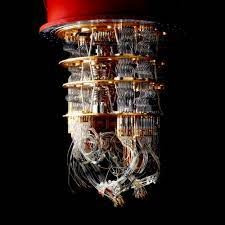
argue that the ChatGPT-computer hardware nexus has consciousness. Its nature will take time to understand. And that consciousness will not be human. So there will be limits to our understanding. Already, with the creation of so-called neural networks, computers are generating solutions to problems in ways that are beyong our ability to understand: there is a branch of research dedicated to this. A fortiori, when quantum computers start to arrive. Not only will they be doing far more computations with far more complexity, but they will be operating according to quantum laws, which are strange and counter-intuitive. It is hard not to imagine some of that strangeness seeping into their computational solutions. Even if we don't attribute consciousness to them, they may still come to seem Other, or trans-human, to us.
Intelligence is from the same root as intellect and intellectual. It used to have a spiritual, metaphysical connotation. Even now the word ‘intellectual’ carries the connotation of being cultured in some way. Nowadays, intelligence is often defined more narrowly as the ability to think logically and to find rational solutions.
Certainly AI will advance in intelligence in the narrow, rational sense, and become more generalised. But can it have that wider meaning?
This is the Gemini-Sagittarius axis. Gemini pays attention to facts and information, Sagittarius to their wider meaning. AI can do Gemini, but can it do Sagittarius?
The defining planetary cycle for earthly life used to be Jupiter-Saturn, as the 2 outermost planets. Since the discovery of the outer planets, the Neptune-Pluto cycle has defined the age we live in, which lasts about 400 years. The last conjunction around 1890 was in Gemini, as was the conjunction 400 years before that. It corresponds to the long rise of science, which can be seen as Gemini: at its narrowest, science is facts without meaning, facts as ends in themselves. That is the ongoing metaphysical imbalance which astrology reveals us to be living through in our age.

So can AI genuinely move from Gemini to Sagittarius, or just give the appearance of doing so? This is the theme of much sc-fi, from the computer Hal in 2001: A Space Odyssey, to the Cylons in Battlestar Galactica. I think ChatGPT is giving us the feeling, despite our rational awareness, that that shift is happening. ChatGPT will improve in leaps and bounds in the coming years.
Aquarius is
the sign of humanity at its finest, as well as at its scientific coldest. Pluto
in Aquarius, this time round, seems likely to lead to an intense consideration
of what it means to be human, in the light of the machine parallels that we are creating.